New detector triples the speed of SLAC’s electron camera, enabling higher sensitivity
Researchers reengineered an ePix10k detector for use in ultrafast electron diffraction, empowering studies of chemical processes that were previously out of reach.
By Chris Patrick
Key takeaways:
- A new detector at SLAC’s instrument for megaelectronvolt ultrafast electron diffraction (MeV-UED) can measure electrons at the instrument’s maximum production rate of 1,080 hertz, tripling the previous maximum that left valuable data unrecorded.
- Collecting three times more data within the same time span to enable higher sensitivity, the new detector makes experiments vastly more efficient and allows researchers to study more subtle chemical processes.
- Teams across SLAC collaborated to engineer this ePix10k detector – a technology originally pioneered at SLAC for X-ray studies – to detect electrons and function in a vacuum.
An instrument that uses high-energy electrons to take “snapshots” of ultrafast chemical processes at the atomic and molecular level just got a major upgrade.
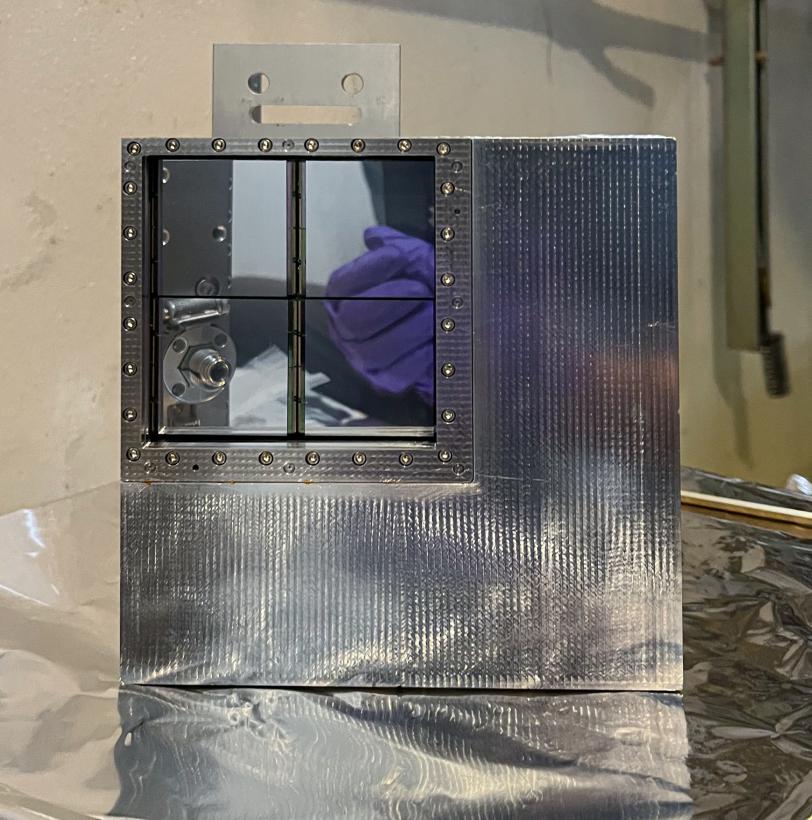
Researchers have conducted the first experiment using a new detector, installed in the megaelectronvolt ultrafast electron diffraction (MeV-UED) instrument, at the Linac Coherent Light Source (LCLS) at the Department of Energy’s SLAC National Accelerator Laboratory. This detector is the first to keep pace with the MeV-UED’s maximum electron production rate of 1,080 electron pulses per second. Compared to the previous detector’s maximum rate, the new detector collects three times more data over the same time span, drastically improving the instrument’s efficiency and sensitivity.
“With this new detector, we’re able to read out each individual pulse of electrons from the instrument,” said Alexander Reid, MeV-UED facility director. “That gives us a much more powerful way of examining the experimental data to answer our science questions.”
Improved sensitivity enables new experiments
MeV-UED tracks how electrons scatter when passing through samples. The scattered electrons produce diffraction patterns on a detector – signals that encode the positions of atoms and electrons in the sample and reveal structural changes that occur within a tiny fraction of a second. These structural changes, in turn, help researchers decode photochemical reactions and other important processes in chemistry, biology, materials science and other fields.
With its higher data collection rates and sensitivity, the new detector allows researchers to better observe subtle chemical processes that produce weak diffraction signals and have been difficult to study before, such as proton-transfer reactions. Proton transfers are involved in many reactions, including the catalysis of biochemical reactions, but they occur within one millionth of a billionth of a second, making them challenging to catch.
“This improved detection efficiency will not only shorten experiments but also give us even finer details of these molecular changes as a function of time,” Reid said.
Head of the LCLS Chemical Sciences Department, SLACThe difference between this detector technology and the old one is like the difference between a car and a spacecraft. It's really a game changer for this experimental setup.
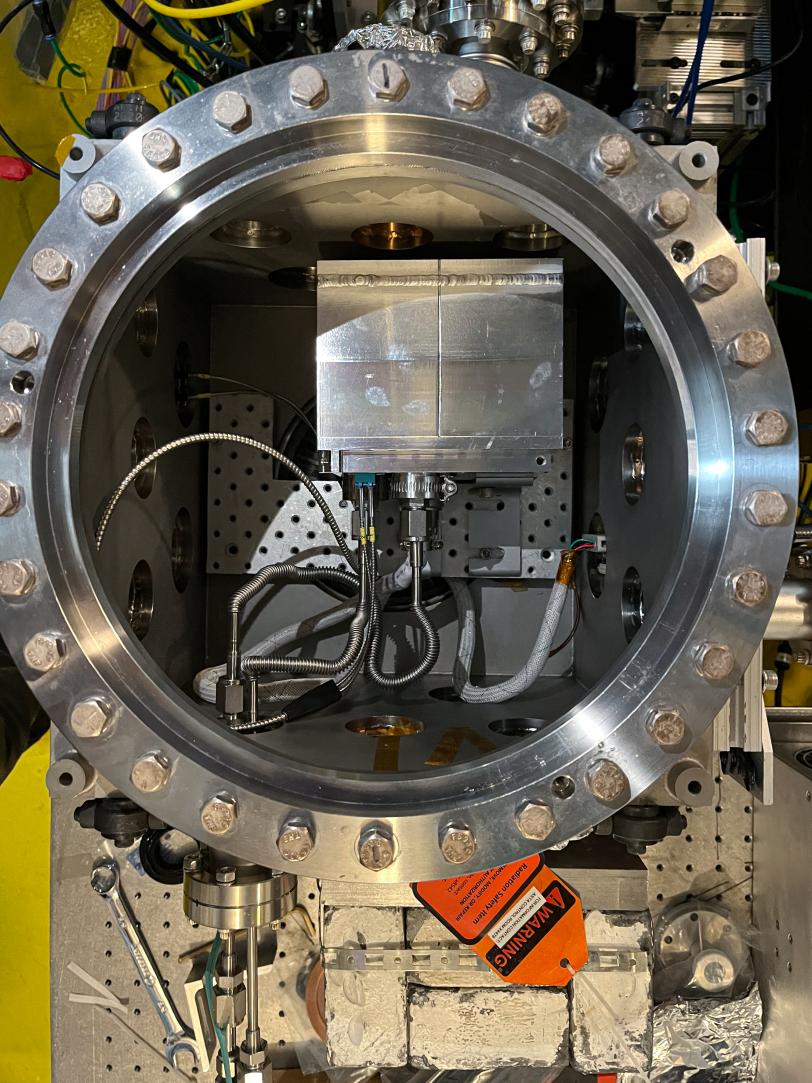
Because the detector will measure every available pulse of electrons – three times more than before – teams will also be able to vary experimental conditions, such as light and temperature, from pulse to pulse to learn more about how these changes affect the chemical reaction pathway. The pulse-by-pulse detection will allow researchers to use new measurement strategies that sharpen structural features, boost time resolution and enhance signal quality.
“The difference between this detector technology and the old one is like the difference between a car and a spacecraft. It's really a game changer for this experimental setup,” said Thomas Wolf, head of the LCLS Chemical Sciences Department and principal investigator at the Stanford PULSE Institute. “The new detector will also tremendously benefit more sophisticated data analysis methods based on machine learning.”
Wolf led the first test experiment with the new detector, in which researchers measured the changing structure of a gas molecule, iodochloromethane, that plays a role in the depletion of ozone in our atmosphere. The new setup is now available to MeV-UED’s user community.
Cross-team collaboration achieves upgrade
MeV-UED’s new detector is a version of the ePix10k, a detector pioneered by engineers at SLAC to detect X-rays. Introduced in 2020, the ePix10k was ten times as sensitive as its predecessor and was rapidly adopted by X-ray facilities around the world. Researchers at MeV-UED were eager to apply the technology to electron detection. However, while the X-ray detector works in ambient air, high-energy electrons are easily scattered by air molecules, so teams across SLAC reengineered the detector to function in the MeV-UED instrument’s vacuum.
Megaelectronvolt Ultrafast Electron Diffraction (MeV-UED)
Learn more about the facility and how to become a user.
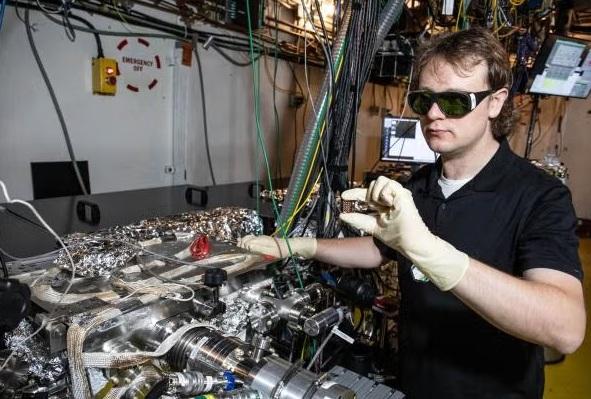
“This detector brings together a lot of different expertise coming in from across SLAC,” Reid said, highlighting the combined efforts of SLAC’s Technology Innovation Directorate, Accelerator Directorate, as well as the detector, data platforms, experiment data systems, and ultrafast electron diffraction groups in the LCLS Directorate. Together, the teams optimized the heat management of the ePix10k detector so it could properly cool while functioning at a high rate in a vacuum, adapted the detector from the lab to the beamline, and adjusted the instrument’s setup to deal with higher data rates from the new detector.
“I specifically want to recognize SLAC’s Jasmine Hasi, Chris Kenney, Gabrielle Blaj, Dionisio Doering, Larry Ruckman, Julian Mendez, Jose Valle, Fuhao Ji, Yusong Liu, Monarin Uervirojnangkoom, Patrick Oppermann, Divya Thanasekaran, Joel England, Kazutaka Nakahara, Philip Hart, Conny Hansson, Matt Weaver and Chris O’Grady for their leadership and expertise in this effort which enabled this new capability,” Reid said. “Because of the expertise available to us at the lab, we are continuing to push the frontiers of electron detection.”
This work was funded by DOE’s Office of Science. LCLS is a DOE Office of Science user facility.
For media inquiries, please contact media@slac.stanford.edu. For other questions or comments, contact SLAC Strategic Communications & External Affairs at communications@slac.stanford.edu.
About SLAC
SLAC National Accelerator Laboratory explores how the universe works at the biggest, smallest and fastest scales and invents powerful tools used by researchers around the globe. As world leaders in ultrafast science and bold explorers of the physics of the universe, we forge new ground in understanding our origins and building a healthier and more sustainable future. Our discovery and innovation help develop new materials and chemical processes and open unprecedented views of the cosmos and life’s most delicate machinery. Building on more than 60 years of visionary research, we help shape the future by advancing areas such as quantum technology, scientific computing and the development of next-generation accelerators.
SLAC is operated by Stanford University for the U.S. Department of Energy’s Office of Science. The Office of Science is the single largest supporter of basic research in the physical sciences in the United States and is working to address some of the most pressing challenges of our time.
Related stories